


Paid app promotion has become one of the most effective ways for brands to grow mobile applications and reach new users. If you are looking at your mobile phone right now, you are probably using one of the apps you downloaded. Your phone is full of different apps, one that helps you with your daily tasks, another for fun, and a third for your job, and so on.
In today‘s market, we have approximately 2 million iOS apps and 3 million Android apps. The 10 most used apps in 2025. were: Instagram, Facebook, WhatsApp, TikTok, YouTube, CashApp, Amazon Prime Video, Google Photos, Facebook Messenger, Microsoft Teams.
In this article, we share our experience and strategy behind successful app promotion. Installing an app brings a brand closer to users, and brands aim to build loyal customers, whether to increase sales or maintain user attention. Apps provide a more personal user experience. That is why measurement should always be the starting point.
Measuring app promotion performance
Before starting any marketing activities, it’s essential to set up proper measurement. The app ecosystem of the app itself, platforms (Android or iOS), and connected services such as paid promotion and analytics.
“Purchases through apps are three times higher than through websites.”
Tracking Google conversions
So, how do we set up analytics for Google Ads? Analytics tracking is configured separately for Meta and Google campaigns.
With Google, things are relatively straightforward. Android apps can be connected directly to Google Ads without additional coding, enabling conversion tracking to work automatically. It is enough to connect the Google Ads account with the Play Console, after which the system will automatically optimize for conversions.
For the iOS apps, Google does not have direct access to Apple’s data. Therefore, conversion tracking requires Firebase SDK or Mobile Measurement Partners (MMP), such as AppsFlayer. Without the SDK, only website button clicks can be tracked, which are proxy metrics rather than real app installations. We recommend Firebase because it allows you to track, create, and sync events directly, improving learning. Of course, there is a deep connection between the Play Store and GA4.
Tracking Meta conversions
And how do we track Meta conversion? To properly track app installs and in-app events for the Meta app promotion campaigns, tracking must be implemented directly inside the app.
This can be done in one of two ways:
- to use a Mobile Measurement Partner (MMP) such as AppsFlayer, Adjust, Branch, Singular, and Kochva
- by integrating the Meta SDK directly into the app.
An MMP acts as an intermediary between the app and Meta, sending event data back to Meta after proper SDK integration. Once correctly implemented, Meta can track:
- App installs
- First opens
- Registrations
- Purchases
- Custom in-app events
It is also important to note that Android and iOS SDK implementations differ, which should be considered when coordinating with developers. Additionally, the correct ad account must be connected to the SDK with the appropriate admin permissions. A common mistake is attempting to set up app tracking through GTM or standard web analytics. App tracking must originate from within the app itself.
Paid App promotion strategy
The main challenge in app promotion is standing out from the competition and gaining a competitive advantage. Our approach focuses on simplicity and three key pillars:
- awareness
- acquisition
- retention
The key ingredient is our agency’s creativity: delivering the right message to the right user at the right moment, supported by a strong, consistent brand voice. One secret ingredient to get more insights into your competitor is the Ads Library.
Ad Library is the Meta tool for checking your competitors’ ads. It is enough to select all the ads, enter the competitor’s name, and you will see their ads, so you can do a quick analysis.
Google campaigns type
Why is a paid app strategy so important? First, it prevents wasting time and budget on tactics that are not effective for your app. Because apps create a highly personal user experience, it is essential to understand who will use your app, when they will use it, how often, and which goals you want to achieve.
When starting with paid app promotion, specifically Google and Meta Ads, we always begin with the user. We analyze customer personas, their habits, the content they consume daily, and the language they use. This becomes the foundation for building an effective strategy.
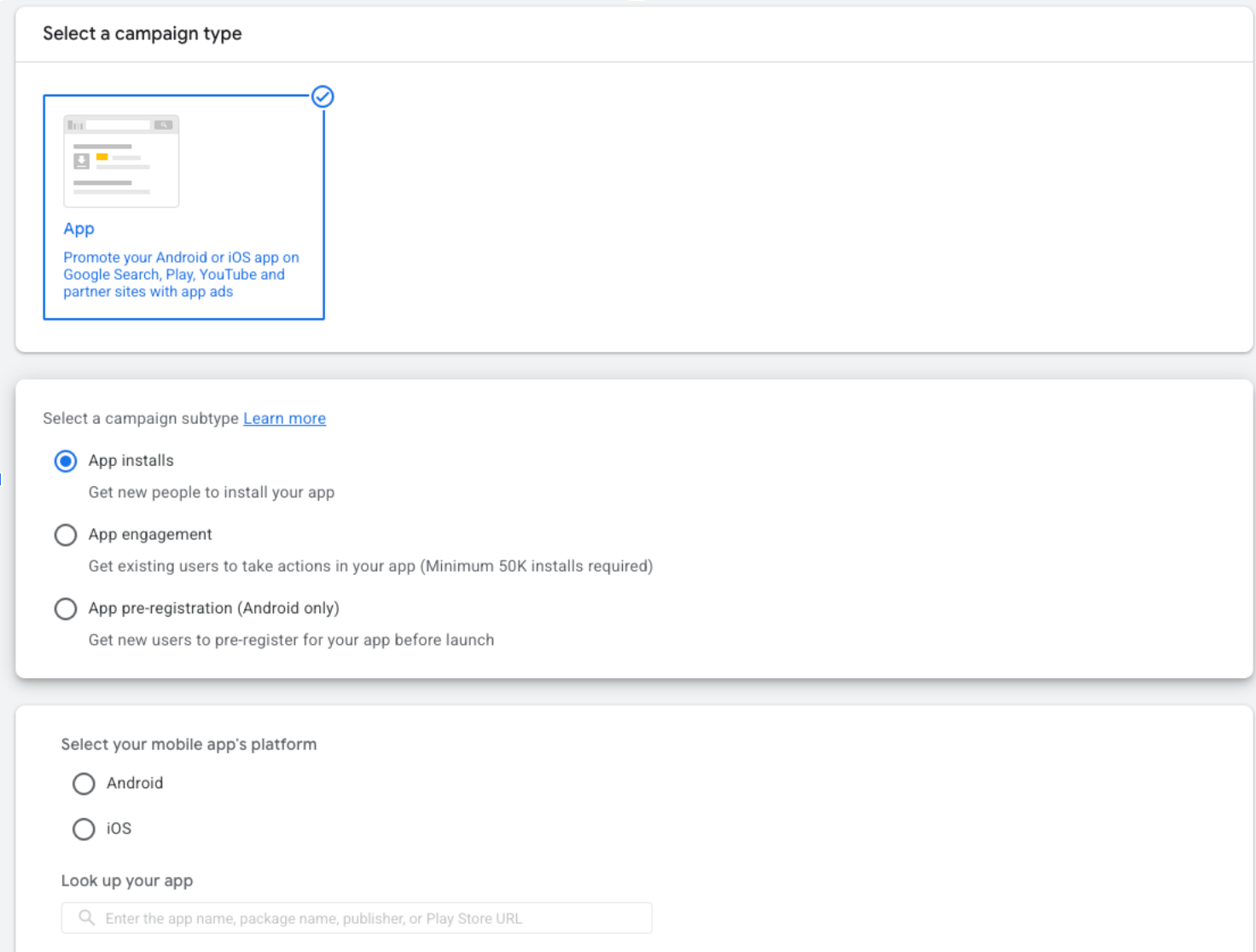
In the first stage of your strategy, you will choose the App installs campaign subtype. The goal here is to get the app’s install volume. You will choose the app ecosystem. It is easier to start with an Android app. After this, you will have to define your target audience, write an ad, and add other assets such as pictures and video.
Your job isn’t finished here. After the algorithm learns and the first users are in, you can start optimising your data. Another campaign subtype you can use after installing an app with 50 K. You can do the same with the iOS campaign, which will be separate from the Android campaign. Our insights showed that the combination of display brand awareness and search campaign is a valuable mix that achieved goals.
We love to do creative testing on asset-level groups, such as lifestyle vs. benefit messaging or holiday offers vs. regular offers, using different texts and videos.
One more tip: when you want to increase awareness, consider offering a gift to users who will use your app. It can be anything that motivates them to use your app more. For example, a wallet with cash, coupons, or something similar.
Bear in mind that the great thing about the App install campaign here is that Google has automated many aspects, so there is less control over your campaigns. But if you do your homework well and do research before starting, you can have higher success. Similar to Meta Ad Library, Google also has a similar tool. It is called the Ads Transparency Centre. You can check your competitors’ activity here, including copy, ad types, visuals, etc.
Meta paid app campaigns
Meta is an invaluable channel for promoting your app. Statistics say there are more than 3.5 billion daily users across its platforms. The increase is 7% year-over-year. Also, Threads play a significant role in this growth with 145 million daily active users.
Key components of the Meta paid app strategy here are:
- campaign setup
- automation (Advantage+)
- creative strategy
- targeting and data
- optimization tactics
As we mentioned earlier, SDK integration and conversions tracking are essential for success. Best practices showed that scaling and gradually increasing the budget on top-performance campaigns. Ads creative have a crucial role in campaign success. Pro tip here is to film vertically, include sound (voiceover or music), place key information within safe zones, and, of course, make it entertaining, relatable, and digestible. Try to create content and visuals for more demographic groups. Include interesting videos, images, and stories. Test them. We love to combine videos with visuals that have strong CTAs and versatile text. Find more about visual branding and apply one of the proven strategies.
Targeting plays a big role. We use custom and lookalike audiences to reach users who are most likely to download the app. Also, you want to retarget engaged users.
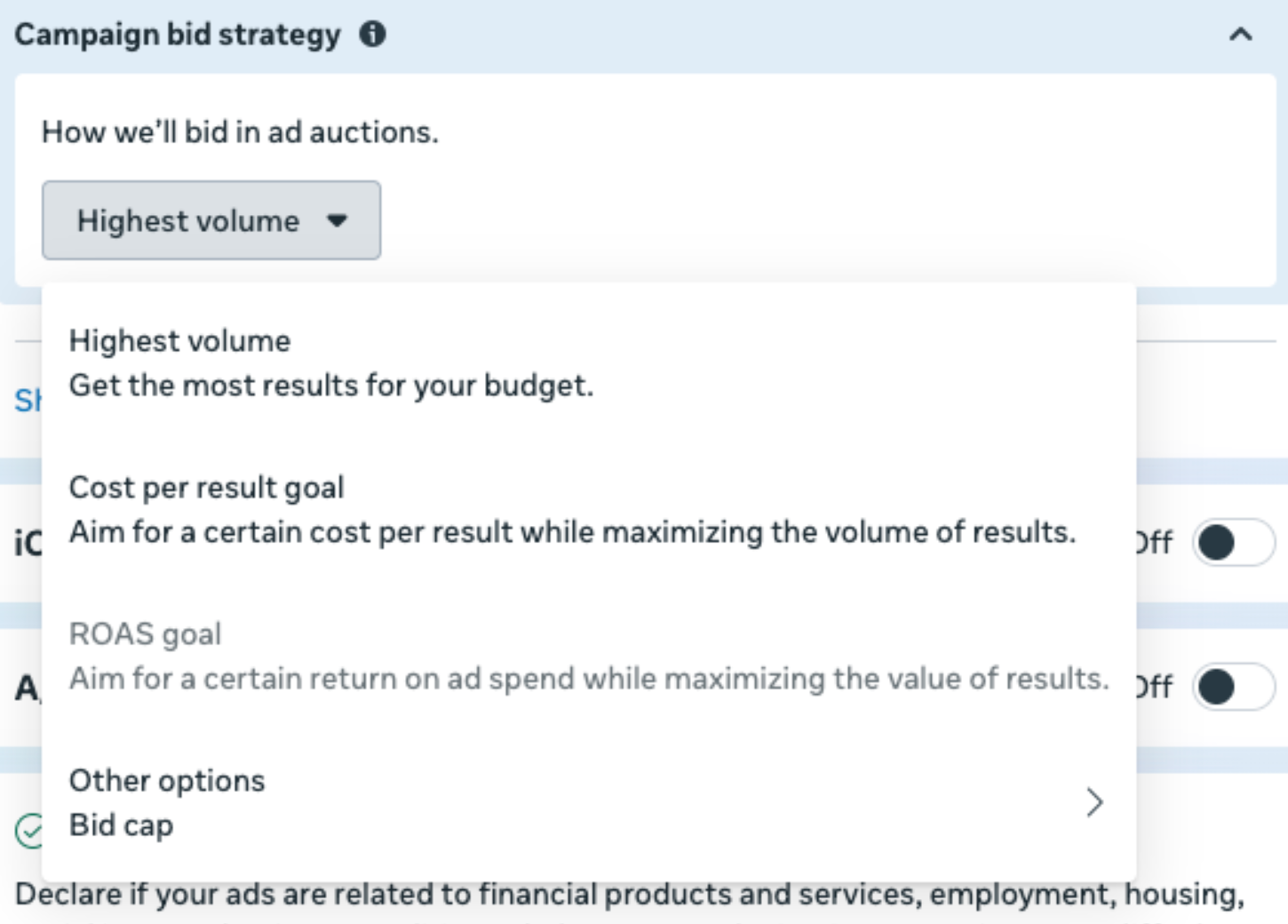
Meta offers 3 types of bud strategy:
- spend-based bidding (highest volume or highest value)
- goal-based bidding (cost per result or ROAS goal)
- manual bidding (bid cap)
Data-driven optimization and learning phase
One of the most important aspects of Meta app promotion is understanding the learning phase. During the early stages of a campaign, the algorithm collects signals to identify users most likely to install and engage with the app.
Our experience is first to start with broad targeting, and after 50 downloaded apps, you should start changing your target. If you start with too narrow a target audience, you won’t let the algorithm learn. After setting the target audience, test reels, stories, and feed formats to see which perform best with your audience. Consistent monitoring combined with gradual optimization typically delivers stronger long-term results than constant manual intervention. While app installs are an important metric, long-term success should be measured through post-install behavior. Metrics such as first open, registration, in-app engagement, and retention rate provide deeper insights into user quality. Focusing only on installation volume may lead to short-term growth but lower long-term value.
Social proof is also the next big thing, since we all love to hear and feel more secure when someone else has tried the app or service before us. So keep that in mind when making a copy or creatives. Making frequent or significant changes too early, such as adjusting budgets, creatives, or targeting, can reset the learning process and slow down performance.
The success of paid app promotion is in the strategy
We have run a wide range of paid app campaigns for our clients, and one key insight stands out: the success of app promotion always comes down to strategy. At first glance, paid app advertising may seem highly automated, leaving little room for creativity or strategic thinking. However, the real opportunity lies exactly there. A successful approach requires long-term thinking, a deep understanding of your audience, and the ability to address real user needs. Your app should first solve users’ problems and respond to their pain points; only then can strong copy, creative solutions, and compelling messaging truly attract them.
By combining creative strategy with insights from tools such as the Meta Ads Library and Google Ads Transparency Center, brands can identify competitive advantages and position themselves more effectively in the market.
Our most successful campaigns and our most satisfied clients have come from a smart, long-term creative approach supported by our experience with Meta and Google automation systems.


